Powered by Blogger.
  • Home
  • K-Beauty Reviews
  • How To
  • Skincare 101
  • Actual Skincare Routine
  • Contact
  • Disclaimer
Facebook Instagram Google+ Bloglovin

Glow With Mei


Welcome back to my blog ♥

This is the fifth part of my Skincare 101 series where I'm planning to cover all these following sections, to help you understand better the whats, hows and whys of skincare even if you are beginner.

- What is your skin type? 
- Basic Korean skincare routine
- 10 not so common ingredients widely used in K-beauty
- Double cleansing: why should we double cleanse?
- Exfoliation: Chemical vs Physical ← We are here
- Wash-off masks: Types and purposes
- Toners: Types, and how are they different from western toners?
- Acids
- First essences: What are they exactly?
- Serums, Ampoules: What is the difference?
- Moisturisers: Lotion, Emulsion, Gel and Cream: What's the difference?
- Eye creams: Why should you use and eye cream?
- Sheet masks: Tips and Tricks
- Pores: how to deal with them?
- Acne: Products that helped me and my siblings to get rid of my acne.


Now that you can identify your skin type, are familiar with the different steps of korean skincare routine and know the importance of double cleansing, let's move to the next topic: Exfoliating.

Exfoliating is another important step in our skincare routine that many people ignore, or just do it because they were told they should and sometimes even end up overdoing it and harming their skin, thus the reason I decided to detail it and share with you guys everything you should know about it

Should I exfoliate? Why?

Just like our hair, our skin keeps growing in layers: New skin cells are generated everyday on the bottom of the outermost layer of our skin (epidermis), to replace older cells that keep changing shape (from "chubby" square cells to flattened ones) and moving toward the very top before they flake off and shed.

As we get older, our skin loses its capacity to shed away the outer dead skin, and thus dead skin cells start accumulating on top of our skin trapping with them lots of oils, keratin, melanin and impurities which makes your skin look dull, dark and dry. So for your skin to go back to its glowy and radiant glory, you have to exfoliate to get rid of all these build-ups, clean up your pores to make them look much smaller and cleaner, reveal new fresh and healthy skin, enhance your skin's ability to absorb all the goodies you're gonna apply later on, and promote skin turnover.

How many types of exfoliants are there?
Currently, there are two main types of exfoliating agents in the market: Physical and Chemical.
They practically do the same thing but in a different way. Here are some of their main characteristics so that you'll know which one is best for you.

Physical Exfoliation:

Anything used to manually scrub your skin clear of dead skin and debris is a physical exfoliant, be it scrubs (products with tiny grains and bits in it), brushes, sponges or washcloths.

Pros:
After scrubbing your skin, you can instantly notice how smooth your skin feels and how radiant it looks. Physical exfoliation also stimulates blood circulation in your face which gives you that rosy glow that you shouldn't confound with irritation.

Cons:
Can be easily overdone. You should massage your skin gently since the scrubby granules (black sugar is the most commonly used in k-scrubs, but can also be water soluble beads or seeds) are enough to get the job done, and if you rub them on your skin roughly you can end up irritating your skin and sloughing off not only the dead cells but also expose the raw skin tissue to bacteria.
Moreover, not all physical exfoliants exfoliate equally, as some of them can be quite harsh for your skin, like brushes with stiff bristles or scrubs made out of nutshells or fruit bids, as the latter are too sharp and can create some micro-tears, which are little tears in the skin that look like the scratches made by sandpaper on the wood.
Keep in mind that you SHOULDN'T use scrubs when you are having an active breakout!!

Besides scrubs, are there other forms of physical exfoliants?
As far as I know, there are two other forms that are practiced by professionals: Microdermabrasion which is practically scrubbing the face by using a minimally abrasive instrument to gently sand your skin, removing the thicker, uneven outer layer, and is especially ideal for people with discoloration, wrinkles, stretch marks and light scarring.
There is also Dermaplaning, which sounds both fun and scary since they use scalpels to scrape off the topmost layer of the skin consisting of dulling skin cells, to reveal a fresher layer and make the skin look smoother and brighter. But remember, you can't do it by yourself! you need to get it done by some experimented specialist.


Chemical Exfoliation

Chemical exfoliants remove dead skin cells with the use of chemicals, most commonly low percentage of gentle acids, to help with the skin cell turnover, which is a fancy way to say that they get rid of all of these dead skin cells to make way for new cells (shine) to take/turn over, and reveal not only smoother but brighter skin as well as stimulate collagen production, reduce wrinkles and and firm the skin. Chemical exfoliants come in the form of peels, cleansers, toners, serums, and even moisturizers.

What types of acids are used?

There are two types that are commonly used, and that are available in varying percentages so you can work your way up depending on what your skin needs.

AHAs or Alpha Hydroxy Acids:
Are derived from natural substances and work on the surface of the skin, which means they work best for people with superficial skin concerns such as sun damage, hyperpigmentation and uneven skin texture. They are also ideal for people with dry skin since they dissolve the "glue" that prevents their dead skin cells from flaking off and gives them that uneven and bumpy skin texture as well as their dry patches (what I hate the most), but unfortunately, that's where their job ends since they are water soluble and can't penetrate any further into pores. So if you think AHAs are what you need, look for ingredients like: Lactic acid or Glycolic Acid.

BHA or Beta Hydroxy Acids
Unlike AHAs, these are oil-soluble molecules that are able to penetrate deeply into he skin and pores and thus can target deeper problems. It also has anti-inflammatory and antibacterial properties, which makes them perfect for people with acne prone skin who are battling with blackheads and acne. So if that's what you are looking for, then Salicylic acid is your friend.

Can I use both at the same time?
Of course! Each of them target a different area so coupling them would take care of both superficial and deeper problems.

Anything else I should know about these Acids?

- As mentioned before, AHAs and BHAs come in a variety of concentrations that you should work your way up instead of using a high percentage product that might be too harsh for your skin. AHAs are usually really effective at about 10% while BHAs and effective at only 1-2%. You can go a little higher later on but make sure to observe how your skin reacts to it and you aren't being too harsh on it.
- AHAs and BHAs should be applied right after cleansing (with a low pH cleanser, or use a clarifying toner that balances the skin's pH without adding much to the skin), and leave it on for about 20 to 30 minutes to absorb and do their job. They will dissolve the dead skin and all the other debris to clear the way for other products to be fully absorbed, which improves their effectiveness.
- Since they expose new skin cells to the world, this fresh skin is more sensitive to the sun than usually which means it is imperative to use sunscreen.
- When you first start using these acids, they might cause purging which is characterized by tiny whitehead in the usual trouble spot, it's as if they're kicking all the dirt out. However, this shouldn't be confused with breakouts due to the products that is characterised by inflamed acne in unusual spots.
- Usually, you can see results after using AHA and BHA products within a month. So if you don't this means that product isn't for you.
- Also, when you aren't noticing any effects, this doesn't essentially mean that it's because of the active ingredient in there but maybe the whole formulation isn't for you and you need to try a new one.
- Reacting positively to a product doesn't last forever. Chemical exfoliants tend to result great and sometimes spectacular improvement in the beginning, but after a while this improvement will slow down in pace. I know life is unfair. But this doesn't mean that you should stop exfoliating because this way you old skin will show back again. All you have to do is change the formulation or give your skin a break for about a week or two and go back to using you BHA/AHA product again.
- Unlike physical exfoliants, you can't really over scrub your skin, which makes them perfect for sensitive skins, but this doesn't mean that your skin can't be irritated by using them. Exfoliants shouldn't be coupled with other harsh treatments like retinols, otherwise you'll end up with a flaky, blotchy and irritated skin, so make sure you read your products' ingredient list before adding any additional product to your skincare routine. Furthermore, chemical exfoliation makes the skin photosensible (especially when coupled with ingredients like citrus essential oils and ginger) since it exposes new skin cells to the sun, so make sure to apply a sunscreen before taking one step outside!


What about peeling pads?
This is a combination of them both. The pads themselves have often an embossed side to act as a manual exfoliant, while the product they are soaked in acts as a chemical exfoliant. Keep in mind that they contain a low concentration of the active ingredient (around 0.5%) most of the time, which means that they aren't as effective as essences and serums with a higher concentration, but on the bright side, you can use it daily as a toner.


How often should I exfoliate?

Generally, we should exfoliate twice a week, but there are some factors that we should take into consideration like skin type: twice a week might be too much for people with sensitive and delicate skin, while it might not be enough for those with an oily skin since the oil might trap the dead skin cells and prevent them from shedding. Or what other products you are using: if you are applying toner with a cotton pad, using actives (AHA/BHA) or cleansing your face with a brush, then you are already mildly exfoliating your face daily and you wouldn't need to use a scrub/peel as often. But in the end, we are all different with different bodies and needs, that's why I think we should do what we feel like our skin really needs, be it daily or once a month, it's all about what suits us best.


How would I know if I'm over-exfoliating?

Our skin is not a wooden board that needs sanding, that why we should always exfoliate gently, and moderately. But sometimes, we might overdo it without realising it, and end up pulling cells away that aren't ready yet to be shed and harming our skin instead of taking care of it.
There are many signs that occur on your skin when you overuse your exfoliant, and among others, the followings are the most common:

- Excessive dryness
- Irritation
- Redness
- Sensitivity
- Inflammation
- Stinging or burning sensation
- More breakouts

So if you experience any of the aforementioned signs, stop using your exfoliant and give your skin a break for a while for it to recuperate, and focus on mild and calming products instead.


Any recommendation?
As promised, I'll add some recommendations at the end of every section of this Skincare 101 series. So here we go:

Scrubs:
Personally, I mainly use ones with black sugar with them which explains my recommendations:

Skinfood Black Sugar Wash-off Mask:
This one is a cult favorite, and there is a reason why it is. I love how it exfoliates the skin and keeps it smooth and supple without being extra harsh, and for a very affordable price.
Get yours at Amazon for $8.75


Klairs Gentle Black Sugar Facial Polish:
This scrub has been my favorite for a long time since it has better effects than the skinfood one, but although it claims to be gentle and suitable for people with sensitive skin, I wouldn't recommend for those of you with sensitive skin it since imo it's harsher than the skinfood one. You can read a full comparison between this one and the Skinfood one here.
Get yours at:
- Amazon
- StyleKorean
- Wishtrend


Skinfood Black Sugar Strawberry Wash-off Mask:
This is the milder version of the above mentioned Skinfood scrub, but still makes your skin feel instantly soft and glowing. Bonus: It also smells super good (unlike the original skinfood black sugar scrub that has a strong lemon detergent scent)
Get yours at:
- Amazon
- StyleKorean


Innisfree Real Quinoa Mask:
One of the recently launched scrubs/wash off masks. The first time I used it I was really put off by how awful it smells (apparently that's how quinoa smells..), but I still decided to give it a second chance and now I'm loving it. The quinoa skins exfoliate the skin gently yet effectively, while the product itself nourishes the skin. It didn't only give me an instant glow and softness (like most facial scrubs) but I noticed that my skin became brighter and healthier after using it regularly. You can find my full review here by the way.
Get yours at:
- Amazon
- StyleKorean


Konjac Sponges:
Konjac sponges are super soft and gentle you can even use it daily with your favourite foam cleanser to softly exfoliate your skin, but don't forget to keep them really clean and replace it regularly to prevent getting unwanted bacteria on your face.
You can use whatever konjac sponges you can find (just make sure that these are real konjac sponges) since they are practically the same.


Peeling Pads:

For the last two years, peeling pads became a trend so of course I made sure to try some of them and see for myself what are the ones that are actually worth the hype. Here are some recommendations:

COSRX One Step Pimple Clear Pad:
One of last years best sellers and I can absolutely understand why. The pads aren't really rough and the BHA concentration isn't high either, but together they do a decent job exfoliating your skin and clearing it after regular usage. You can read my full review here.
Recommended for: All skin types, especially Acne Prone Skin.
Get yours at:
- Amazon
- StyleKorean
- Wishtrend


Missha Super Aqua Smooth Skin Peeling Pad:
I first heard about these pads from Edward Avila and then decided to give them a try. IMO, they work as well as the COSRX ones, but I can't help but like the COSRX ones more. But I still decided to include them since many people who didn't really like the COSRX ones seem to like this one. Remember, What might work for you might not work for others ;)
Recommended for: All skin types
Get yours at:
- Amazon


COSRX One Step Moisture Up Pads:
Another decent daily exfoliant that comes with an extra bonus: Heaps of moisture. I personally am obsessed with these pads since they do a good job improving my skin texture and getting rid of all of those flaky skins I have while giving my dehydrated skin the moisture it needs. I didn't know how much I needed these pads until I tried them. (reviewed here)
Recommended for: Dry/Dehydrated to normal skin
Get yours at:
- Amazon
- StyleKorean
- Wishtrend


Peeling Gels

Missha Aqua D-tox Peeling Gel:
This is one of the first peeling gels I've ever used. It's on the cheap side yet gives decent results. If you are on a budget and need a chemical exfoliant, this might be the right one for you.
Get yours at:
- Amazon


Dr. G Brightening Peeling gel:
This peeling gel's ingredients are quite interesting. it is rich with both peeling and hydrating agents which makes is really effective yet gentle on the skin.
Get yours at:
- Amazon


Missha Super Aqua Oxygen Micro Essence Peeling:
And in case you need to add some fun to your skincare routine, you would probably love this one. While bubbling up, it does a really decent job getting rid of all of these dead skin cells while stimulating the blood circulation at the same time. It doesn't leave any residue nor strip the skin from its moisture.
Get yours at:
- Amazon


That's it for today. Hope it was helpful and don't forget to like, share with your friends and family and comment down below to let me know if there is anything you want me to include, or any questions in general.

Have a lovely day ♥

Don't forget to follow me on social media for more updates ^_^ 

Bloglovin: Glow With Mei
Facebook: Glow With Mei
Instagram: @Glowithmei
Pinterest: Glowithmei


Disclosure: This post contains affiliate links. Clicking those links before you shop means that I will receive a small commission that wouldn't affect the price you pay, which helps to support this blog.
Share
Tweet
Pin
Share
13 comments


The first step of a proper AM or PM skincare routine is always cleansing, and double cleansing is one of the most important steps of the famous Korean 10-step skincare routine, but only few understand the reason we should do it. I mean, why should we waste our time and money cleansing twice using two different products when we can just wipe our eye and lip makeup and use a foam cleanser if we are feeling extra? Isn't it the same thing?
Well the answer is NO, it's not. So together, let's discover why through this article

But before we start, I wanna let you know that this post is the fourth part of my "Skincare 101" series. If you haven't checked the previous parts yet, make sure to check them out they are really full of interesting stuff. (if I had to say so myself)

- What is your skin type? 
- Basic Korean skincare routine
- 10 not so common ingredients widely used in K-beauty
- Double cleansing: why should we double cleanse? ← We are here
- Exfoliation: Chemical vs Physical
- Wash-off masks: Types and purposes
- Toners: Types, and how are they different from western toners?
- Acids and Actives: Vitamin C, BHA and AHA
- First essences: What are they exactly?
- Serums, Ampoules: What is the difference?
- Moisturisers: Lotion, Emulsion, Gel and Cream: What's the difference?
- Eye creams: Why should you use and eye cream?
- Sheet masks: Tips and Tricks
- Pores: how to deal with them?
- Acne: Products that helped me and my siblings to get rid of my acne.
Ps: Keep in mind that I will include in each step some recommendations by skin type.


First of all,

What does double cleansing mean?

Double cleansing is a two step process that involves using two kinds of cleansers:
- An oil or balm cleanser to dissolve all the stubborn long lasting and high coverage makeup, as well as some other oil based particles.
- A water based cleanser (foam or gel cleanser): to remove any oil residue as well as water based particles. This step can be assisted with a mechanical tool whether it's a sponge or a brush to deep cleanse and kinda micro exfoliate.


What makes it better than the cleansing method we are used to?

Cleansing is an important step of our skincare routine. We need to remove all the stuff that built up on our skin throughout the day like makeup, sunscreen, dead skin cells, excess oil, dirt, pollution particles and so. This way when you layer other products on your skin they would be fully absorbed into your skin thus will be effective. Also, leaving all of these stuff on your skin day after day will clog your pores and irritate your skin, and cause some quite nasty pimples that we don't wanna deal with.

Up to just few years ago, a foam cleanser was largely enough to deal with all of these unwanted particles and clean our skin, but back then we didn't have high coverage long lasting foundations and waterproof makeup that are designed to stay put and won't budge by using water based cleansers alone (just try it yourself and then use a cotton pad to check if there is anything left, I'm sure you'll find lots and lots of makeup left), that's why they thought about new appropriate cleansing methods to deal with them.

Skincare is actually meant to take care of your skin problems instead of concealing them with layers of high coverage makeup, and by skipping just this one important step, you won't only prevent your skincare from reaching your skin and doing their job, but also allow these products to build up on your skin, clog your pores, irritate and sensitise your skin and make it look dull and bumpy, and cause more ugly pimples, acne scars, redness and hyperpigmentation that you wanted to cover in the first place but ended up worsening instead, and thus you'll be stuck in a vicious circle.

So just by doing this step properly, you will avoid more skin problems, you'll allow your skincare to do its job properly, thus you won't need to apply as many layers/long lasting makeup frequently and you'll probably become confident about showing your bare skin to the world.

What do you think? isn't it worth it? I bet it is.

Should I double cleanse even on days I don't wear makeup?

It's fine to use only a foam cleanser, but I personally prefer double cleansing even when I'm staying at home. I just feel like my skin is much much smoother when I only use a foam cleanser.
Usually oil and water don't really mix together so to get rid of all these oil based impurities, SPF and sebum that built up our skin throughout the day, we need to use an oil to attract it and dissolve the hardened above mentioned stuff and free your pores, so that my face will be fully ready to absorb all the goodies I'm planning to layer over it (I don't wanna spend lots of money on these products and then don't benefit from them right?)


What types of oils are usually used in these cleansers?

Depending on the cleanser, you can find many different types of oils, but here are some of the most used oils, and some of their benefits:

- Mineral Oil:
There are some that say mineral oil is not the greatest ingredient for the skin, unfortunately It's commonly used in beauty products and usually included for its cheap price.


- Coconut Oil:
Coconut Oil is a great natural ingredient for the skin. It works to moisturise and has many anti-ageing properties. It also helps the exfoliation process and acts as a makeup remover.


- Olive Oil:
One of my favourite oils to eat and use for beauty purposes. Not only it is delicious, it also is packed with antioxidants that are known for their anti-ageing properties. It doesn't clog your pores and it enhances exfoliation, resulting in fresh, glowing skin.


- Grape seed oil:
Just like olive oil, grape seed oil does not clog the pores, and in addition to that it has countless skin benefits. It is a great moisturiser for dry skin, does a nice job healing scars, regenerating and tightening the skin, has anti ageing properties, lightens dark under eye circles and more.


- Apricot Oil:
Apricot is great for moisturising and healing damaged skin as well as minimising the appearance of wrinkles. In top of that, it is odourless.


- Camellia Oil:
It's easily absorbed by the skin and helps to nourish the skin with its healthful anti oxidising properties. It can also be used as a makeup remover.


- Jojoba Oil:
Jojoba Oil acts as a natural skin conditioner.


- Rice Bran Oil:
Rice Bran Oil is full of antioxidants that protect the skin. It is a super moisturizing ingredient and it's a great ingredient for Winter weather. It's light so it's also compatible with oily skin. It also helps maintain your youthful glow by brightening the skin, reducing dark spots and smoothing the skin out and fighting ageing factors.


- Moringa Oil
Moringa oil protects dry skin, moisturises dry it, absorbs easily and creates radiant skin. This is a revered ingredient used since the times of the ancient Romans, Greeks and Egyptians. It also has anti-ageing and dark spot reducing abilities.


- Shea Butter:
Shea butter is extremely moisturising and nourishing to the skin, reduces inflammation, smooths and softens the skin as well as strengthens it and reduces wrinkles appearance.


- Sesame oil:
Sesame oil is easily absorbed into the skin to nourish it deep inside and is rich with antioxidants that promote soft skin, as well as minerals, and is known for its antibacterial and anti-inflammatory properties.


But I have an oily skin. Should I use an oil cleanser too?

Yes. Oil cleansers won't make your skin oilier nor cause more breakouts, if anything they would help to dissolve all these complexes formed by excess sebum and particles hanging in the air that would clog your pores afterwards and break you out. Just make sure to emulsify your oil cleanser with water before rinsing it off, and use a good oil cleanser that doesn't leave a residue on your skin (like the face shop oil cleanser.. it leaves a super greasy residue that's hard to get rid of even with a good foam cleanser, and it broke many people out, my sister included)


What about foam cleansers? is there anything to look for?

To pick the right product for your skin, you have to keep in mind the following foam cleanser properties:

- Skin type:
Each of us is born with a different skin type and should respect it. Many cleansers can be used by all skin types but many others are created for specific skin types and you should keep this in mind otherwise you might harm your skin. (if you aren't sure about your skin type, check my post here where I explained every skin type traits and needs)

- Is it drying? 
Most foam cleansers make your skin feel tight and squeaky clean, and it's not good for the skin. You should look for cleansers that clean your face without stripping it from its natural oils, especially if you have a dry skin
PS: if you have a dry skin, stay away from anything that says Acne, sebum, oil control, pores and so on since they can be quite drying.

- What is its pH?
The skin's natural pH is 5.5, so to keep it balanced, you should use cleansers with the same pH otherwise you would cause a loss of moisture as well as more acne (especially after using cleansers with high pH levels)

- Does it treat acne?
For those of us who are suffering from an acne prone skin, treating our acne starts from using an appropriate cleanser. Fortunately, there are many cleansers on the market that target acne and pore problems, so look for them.

- Is it brightening?
Koreans are obsessed with bright, pale and glowing skin so it's common to find cleansers with brightening properties.

- Does it have a fragrance?
Fragrance can break some people with sensitive skin out, and strong overpowering smells are really bothering. So if you are gonna use a cleanser everyday twice a day, you better know what it smells like and choose a scent that you actually enjoy.


And why is everybody's preoccupied by cleansers' pH?

This post explains it all but long story short: Our skin has an acidic pH that helps it resist bacteria, lock in water and preserve the moisture barrier. By using cleansers with high (alkaline) pH, you break this balance and end up with a dehydrated (since it's no longer able to lock in the moisture) acne prone skin since your skin becomes an optimal environment for bacteria and other microorganisms to grow and reproduce and thus cause more trouble.


Any recommendation?

As promised, I'm gonna include in each category a bunch of recommendations by skin type.

First cleanser:

I've tried a bunch of oil cleansers but the ones that stand out the most for me are the following:

1- Heimish All Clean Balm:


This one has been on everyone and their mother's 2016 favourites (including mine hihih). The ones who created this balm were working for Banila Co., and after leaving they decided to take the Banila Co clean it Zero balm and renovate it, and they came with this version that is in my opinion much much better, both in terms of ingredients and efficacy, and is suitable for all skin types. You can find my full review here as well as a little comparison.

Get yours at Amazon for $16.65


2- TroiAreuke Acsen Oil Cut Cleansing:


This oil-free cleanser works just as well as an oil/balm cleanser, while at the same time removes the extra keratin on your skin and micro-peels it thank to the papaya extract, and also reduces acne and prevents it from getting sur-infected. As I've mentioned in this review, this is in my opinion the best cleanser for people suffering from acne or skin sensitivities . Pricey, but really worth it (this brand over all isn't hyped for nothing imo)

Get it from Amazon for $38


3- Banila Co. Clean It Zero:


Although Heimish balm cleanser is better, this one is still worth mentioning. It does an awesome job removing makeup and comes in 3 different types: the original one for all skin types, Resveratrol for oily and combination skin types, Radiance for dry lacklustre skin and purity for sensitive skin.
This has been a k-beauty cult for a long time, and even now there are still some people who swear with it.

Get it: Banila Clean It Zero Original, $17, Amazon; Banila co Clean It Zero Resveratrol, $18, Amazon; Banila co Clean It Zero Radiance, $18, Amazon; Banila co Clean It Zero Purity, $19, Amazon;


4- Klairs Gentle Black Deep Cleansing Oil:

Just like the other Klairs products, this oil cleanser can be used by everyone but is specifically designed for people with sensitive skin thanks to its hypoallergenic formula and is made of some vegetable oils that allow a mild yet effective cleansing. Another thing that made me like this cleanser is that it's really smooth, unlike the other oil cleansers (let's say this one feels like argan oil while the other cleansers feel like cooking oil? kinda thin and feels like there are some micro granules in it that doesn't make it feel as smooth.. I'm rambling but hope you got what I mean lol), and doesn't leave a greasy residue that's a pain to rinse off.

Get it: At Amazon for $18.20, or Wishtrend for $22.90


Second Cleanser:

I used to think that foam cleansers aren't worth the money, so I've always made my own cleanser but still purchased some that ended up proving my point, but recently I came across some really good cleansers that changed my mind. (I also became lazier than I used to, so I prefer to pay for cleansers than make one that meets my needs). Here are some of these awesome ones:


1- COSRX Low pH Good Morning Gel Cleanser:


Another product that was practically on every Best of 2016 list. It is on the cheap side of cleansers yet does its job effectively without stripping your skin from its natural oils. it also has a low pH level and is suitable for all skin types.

Get yours at Amazon for $10 or Wishtrend for $9.35


2- Neogen Real Fresh Foam Cleanser:


Quite an innovative product. This foam cleanser comes with actual fruit or herbs fermenting in the bottom of the bottle to provide real amino acids and vitamins for the skin. It's made of lots and lots of good stuff and real plants extracts instead of being filled with chemicals. Unlike some other foam cleansers I've tried before, this cleanser's lather is really thick and you feel like your skin is actually absorbing all the good stuff instead of watery thin bubbles.
It comes in four different types: Cranberries for anti-ageing, Blueberry for moisturising, Green Tea for soothing and Cereals for brightening.

Get yours at Amazon for $19


3- Klairs Rich Moist Foaming Cleanser:


This is a mild cleanser that cleanses, soothes and moisturises the skin at the same time, which makes it really suitable for dry and sensitive skin (just like almost every klairs product out there).

Get yours at Amazon for $17.90 or Wishtrend for $16.99


4- Etude house AC Clinic Daily foam cleanser:


Many of my friends with oily skin swear by this cleanser. Yeah it has a high pH level (All u have to do is to use a toner within the 3 seconds or so that follow cleansing your face to balance your skin pH again. which seems kinda hard to do but...) but, it really does what it claims: it controls sebum production and reduces acne (a lot if my friends are anything to judge by). Keep in mind that it might dry your skin out if you don't have an oily skin.

Get it at Amazon for $12


That's it for today, hope it was helpful and let me know in a comment down below what are your favourite cleansers.
Have a lovely day everyone ♥


Don't forget to follow me on social media for more updates ^_^ 

Bloglovin: Glow With Mei
Facebook: Glow With Mei
Instagram: @Glowithmei
Pinterest: Glowithmei


Disclosure: This post contains affiliate links. Clicking those links before you shop means that I will receive a small commission that wouldn't affect the price you pay, which helps to support this blog.
Share
Tweet
Pin
Share
8 comments


Welcome back to my blog ♥

Before moving to detailing every skincare routine step aside, I decided to talk about some not so common ingredients that became trendy in the k-beauty market, and that made many of us confused as to why and who should use them.

This is the 3rd part of this Skincare 101 series where I wanna cover the following parts during the next few weeks:

- What is your skin type?
- Korean skincare routine basics for beginners
- 10 not so common ingredients widely used in k-beauty  ← We are here
- Double cleansing: why should we double cleanse?
- Exfoliation: Chemical vs Physical
- Wash-off masks: Types and purposes
- Toners: Types, and how are they different from western toners?
- Acids and Actives: Vitamin C, BHA and AHA
- First essences: What are they exactly?
- Serums, Ampoules: What is the difference?
- Moisturizers: Lotion, Emulsion, Gel and Cream: What's the difference?
- Eye creams: Why should you use and eye cream?
- Sheet masks: Tips and Tricks
- Pores: how to deal with them?
- Acne: Products that helped me and my siblings to get rid of my acne.
PS: Keep in mind that I will include in each step some recommendations by skin type.


Snail? Horses? Bird nests? What are these? Should I use them?


If you are into Korean or Asian skincare in general, you would have probably heard about some not so common ingredients becoming trendy like snails, horse oil, milk donkey, starfish and so on... Here are some of their awesome benefits:

Snail Mucin:

If you live in Morocco, then you are probably familiar with not only how slimy these little creatures are, but also how delicious they are (yeah we eat them, don't judge. Snail soup or whatever it is called is one of the most delicious street foods here)
If you aren't, then depending on where you live you might consider them as some exotic tiny disgusting creatures, and might be quite weirded out by the idea of putting their slime on your face, but honestly I'm not. I used to gently rub a snail over my acne (and bugs bites) to speed up the healing process and diminish the itching even before getting into Korean beauty.

So what does it contain?
Researches have proven that the slime snails usually produce to protect and heal their fragile bodies from the hard and harsh external factors is actually packed with nutrients such as hyaluronic acid, glycoprotein, proteoglycans, and antimicrobial and copper peptides and other compounds that stimulates the formation of collagen and elastin, protects skin from free radicals, soothes skin, repairs damaged tissues and restores hydration. It can be used to treat dry skin, wrinkles and stretch marks, acne and rosacea, age spots, burns, scars...etc, It's practically a holy grail ingredient that can treat almost every skin concern

Is there any animal cruelty in the process?
As far as I know, there isn't. You can check this youtube video where they show how they harvest snail slime. It is interesting to watch.

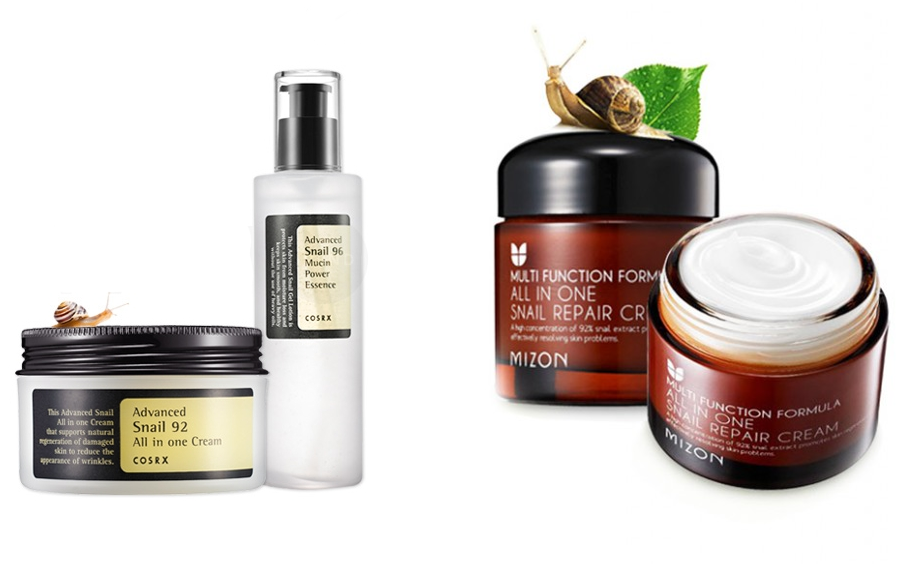
Shop it: COSRX Advanced Snail 96 Mucin Power Essence, $17.5, Amazon; COSRX Advanced Snail 92 All in one Cream, $17.5, Amazon; Mizon All In One Snail Repair Cream, $13.5, Amazon


Starfish Extract:

My mum was a really huge fan of Mizon Returning Starfish creams since they made her skin plump and reduced the appearance of her fine lines in the long run, but by the time she wanted to repurchased it was already discontinued...
There is next to no research about starfish extract benefits to the skin, and the few made ones say that it does a great job healing wounds and scars, but other than that, there is nothing I could find.


Horse Oil:

The first time I've heard about this oil is around 2 years ago when Guerisson came with their  9 Complex Horse Oil Cream, and since then it has been on my To Try list but never got around to purchase it.

Unlike most of the other animal fats, horse oil is packed with unsaturated fatty acids which is similar to natural sebum and thus accepted by our skin easily. It contains Linoleic acid (an omega-6) that is also found in vegetable oils and is known for its high moisturizing properties and its great ability to rebuild the moisture barrier of the skin and thus prevents the skin from becoming dry and dehydrated. As well as Alpha-Linolenic (an Omega-3) commonly found in seeds and vegetable oils, that is known for its great anti-inflammatory properties, which means it is good at calming the skin and de-swelling the pimples.

Is there any animal cruelty in the process?
Unfortunately, yes. But not in the way you think. They don't kill race horses specifically to extract this oil from them (which would be H.O.R.R.I.B.L.E), they extract this oil from horses raised for food and who are killed for their flesh.

Shop it: Guerisson 9 Complex Horse Oil Cream, $19.5, Amazon; Guerisson 9 Complex Horse Oil Hydrogel Gold Mask *6ea, $13, Amazon; Guerisson 9 Complex Essence, $14.5; Amazon


Donkey Milk:

Another interesting ingredient. This ingredient is known to be fairly similar to human milk, but is kinda hard to get since a female donkey produces 1L a day only, and stops lactating way sooner than other animals do.
Koreans aren't the first ones to start using this milk for beauty, since Cleopatra the old Egyptian queen used to soak her body in baths filled with donkey milk to get a soft and bright complexion - Story time:I've always seen scenes of Cleopatra bathing in milk but thought it was cow milk xD I even faked once "accidentally" pouring milk on my head because I thought it would make me a queen when I'll grow up... I was really naive.

This milk is known to be packed with nutrients such as proteins, phospholipids and ceramide that help regenerating and restructuring skin to help reduce wrinkle. It's also rich in minerals and vitamins (C, A, D, E) yet low in fats which makes it a great moisturiser for every skin type, sensitive skin included since it is hypoallergenic.

Shop it: Skin Ceramic Donkey Milk & Argan Oil Steam Cream, $39, Amazon; The Saem Royal Natural Donkey Milk Moist Drop Cream, $33, Amazon;


Syn-ake:

Originally used as an alternative to botox injections, this product became widely used in Korean anti-aging skincare (especially masks, ampoules and serums), is a synthetic form of snake venom that much like botox, works by reducing muscular contractions of the face as well as cell movement and thus keeping the skin smooth and prevent the formation or deepening of wrinkles.

Shop it: It's skin PRESTIGE SYN-AKE Agetox Cream, $41, Amazon; Dewytree Premium Syn-Ake Black Mask x10, $19, Amazon;


Bee Venom:

Whoever thought about this is actually a genius XD
Bee venom is actually used to trick the body and make it think that it's under attack and that is was actually stung by a bee, to make it redirect blood te that area and stimulate the production of collagen and elastin to strengthen the skin and keep it bouncy and elastic. It is also claimed that it kinda relaxes the muscles (just like the syn-ake) and reduces the appearance of wrinkles.

Shop it: Nature Republic Bee Venom Mist Essence, $19, Amazon; Benton Snail Bee High Content Essence, $17, Amazon


Caviar and Salmon Eggs:

Both these ingredients are know to be packed with minerals, amino acids, fatty acids, omega 3 and 6, vitamins, which helps maintain the skin moisture, brightens up the skin complexion and promote skin cells regeneration.

Shop it: Besolbo Royal Salmon Egg Return Cream / Sleeping Renewal Pack, $26, Amazon; Neogen Code 9 Gold Black Caviar Essence & Gold Tox Tightening Pack Kit, $48, Sokoglam (use this referral link to get 20% off your first order)


Sea Kelp:

Kelp and seaweeds are rich with amino acids, antioxidants and proteins, and known for their hydrating, softening and energizing properties, but I have never thought that they would make sheet masks out of fermented kelp instead of hydrogel or cotton sheets, but then, they come up with everything nowadays not only these.

Shop it: Whamisa Organic Sea Kelp Facial Sheet Mask, $14, GlowRecipe (use this referral link to get 20% off your order)


Pig Collagen:

Pig collagen is similar to the human one, that;s why they thought about including it in skincare and use it to smooth out the skin and boost its firmness and elasticity. But since pig collagen is voluminous, it can't really penetrate the skin so it only sits on top of the skin instead and gives it a smooth firm look temporarily.

Shop it: Elizavecca Green Piggy Collagen Jella Pack Pig Mask, $10, Amazon; SCINIC Pig Collagen Jelly Cream, $19, Amazon.


Birds nest:

Unlike the typical nests we know, Swiftlet nest is made out of this bird's dried and hardened saliva which makes it really impressive.
This nest is rich with nutrients such as amino acids and epidermal growth factor (EGF) that stimulate skin regeneration and promote blood circulation, which helps achieving a young, bright and radiant complexion.

Shop it: It's Skin PRESTIGE BN(Bird's Nest) Cream, $25, Amazon; It's Skin Prestige B.N. Eye Gold Patch, $24, Amazon.


Hopefully this post gave you a brief idea about what each of these ingredients are used for, this way it would be easier for you to know which one would work for you and which ones wouldn't.

Also, don't forget to show your support by commenting down below, subscribe via email, share this post with your friends and family, and follow me on social media ♥
Until next time


Bloglovin: Glow With Mei
Facebook: Glow With Mei
Instagram: @Glowithmei
Pinterest: Glowithmei
Share
Tweet
Pin
Share
10 comments


Welcome back to my blog ~~

Now that you are able to identify your skin type, I'll walk you through different korean skincare routine steps that everybody is talking about.

Also just in case you didn't know, this is the second part of my "Skincare 101" series where I'm gonna go over the following sections in the next few weeks:

- What is your skin type?
- Korean skincare routine for beginners ← We are here
- 10 not so common ingredients widely used in K-beauty
- Double cleansing: why should we double cleanse?
- Exfoliation: Chemical vs Physical
- Wash-off masks: Types and purposes
- Toners: Types, and how are they different from western toners?
- Acids and Actives
- First essences: What are they exactly?
- Serums, Ampoules: What is the difference?
- Moisturisers: Lotion, Emulsion, Gel and Cream: What's the difference?
- Eye creams: Why should you use and eye cream?
- Sheet masks: Tips and Tricks
- Pores: how to deal with them?
- Acne: Products that helped me and my siblings to get rid of my acne.
Ps: Keep in mind that I will include in each step some recommendations by skin type.


What's a Korean skincare routine? and why?

Contrarily to western culture where they use makeup to cover their flaws with layers and layers of concealer and foundation (which makes their skin condition even worse in the long run), Koreans (and East Asians in general) are taught since the young age of 12-13yo to focus on taking care of their skin and treat their skin concerns, to maintain a healthy and radiant skin and minimize the effects of aging, also use makeup to enhance their features instead.

So what Korean skincare routines basically aim is preventing different skin concerns such as acne, fine lines, blackheads, hyper-pigmentation etc, instead of covering it to the point it's no longer possible and then start looking for expensive and invasive ways to fix these problems, which would eventually take a toll on their self-esteem and stress them out.

It's not really uncommon among the k-beauty community to hear about skincare routines including 8-12 steps of cleansing and layering product over product, which seems like it's a lot of work compared to the minimalistic western skincare routines that include barely 3 steps, but it is absolutely worth it! I mean, just look how nice their skin is and how they take pride in having some of the best skin in the world!

That being said, this doesn't really mean that you should imperatively go through all of the 10 or whatever steps every day, AM and PM. It's actually all about what you feel like your skin needs that specific day, and the variety of choices a korean skincare routine provides.


What are these steps?

Korean morning skincare routine:

- Cleansing: wash your face with water or a mild cleanser.

Your skin doesn't need much cleansing in the morning since all you have on it is the skincare from the previous evening, and few impurities that settled in throughout the night. So it is preferable to wash your skin only with water, or add a mild cleanser if you have an oily skin.

- Toner:

Toning is an important step to balance your skin pH and prevent it from dehydration. It also helps the following steps of your skincare routine to absorb better into your skin.
PS: it is preferable to use a toner within the first 3 seconds after you cleanse your face, which seems kinda impossible but I believe you can do it. Hwaiting!

- Essence/Serum/Ampoule:

Mainly used to target specific skin concerns.

- Eye cream:

It's important to keep this area hydrated since there are no pores or sebaceous glands there to produce natural oils that maintain the skin's hydration, and thus it is the first zone affected by aging factors.
Also, make sure to be gentle and preferably use your ring fingers to spread the cream, this way you won't apply much pressure on the skin.

- Moisturiser:

Make sure to keep your skin hydrated throughout the day, but don't overdo it otherwise you'll end up with a super shiny face the whole day. (remember that you can always carry on a hydrating mist with you and spray it over your face whenever you feel like your skin needs some moisture)

- UVA/UVB Protection:

I believe this is one of the most important steps in a Korean skincare routine. You should protect your skin from the harmful UV rays on daily basis and not only during summer holidays to keep your skin healthy and prevent acne complications, discoloration, uneven skin tone, fine lines and cancer.


Personally, I don't go through all these steps every single morning. Most of the days I wash my face with water, apply a hydrating toner, a light moisturising lotion and a sunblock.


Korean night skincare routine:

This is where it gets a little bit intense, and where you'll need to do lots of layering.
this is the usual order you should follow, but it's not always the case. Make sure to layer your skin care products from the thinnest to the thickest (except for if you are using acids or actives that need a specific order, I'll talk about them later in a detailed post)

- Oil Cleanser:

Apply an oil or balm cleanser over your dry skin to remove all the makeup, sunscreen and some other oil based particles and dirt that built up on your skin throughout the day. Keep in mind that you can still use it if you have an oily skin.

- Foam/Gel cleanser:

Another important thing in korean skincare is double cleansing: After removing all the oil based products from your skin, use a foam cleanser to remove any makeup or oil residue as well as water based impurities that are still on your skin.

- Exfoliation:

Once or twice a week, use a scrub or a peeling gel to get rid of the dead skin cells that make your skin look dull, your makeup patchy and might cause clogged pores, blackheads and acne.

- Toner:

Just like I said before, use a toner within 3 seconds of cleansing your face to balance its pH level (it's okay if you can't but just try), and allow the following products to absorb better.
It is preferable to use a cotton pad to apply toner in the PM routine and swipe it gently over your skin (you don't wanna rub your skin, sensitise it and create unwanted wrinkles) to make sure there is no left over makeup, and mildly exfoliate your skin daily.

- First essence:

First essence is something that you can rarely find in other cultures other than korean and japanese. This is considered as the heart of korean skincare routine although. It is a multipurpose product that targets at the same time wrinkles and fine lines, dullness and uneven skin tone by promoting the skin regeneration.

- Ampoule:

Ampoules usually are the most concentrated skincare product with active ingredients. Used for targeted skin concerns

- Serum:  

A less concentrated version of an ampoule, also used for targeted skin concerns

- Sheet mask:

One of the most interesting steps of a korean skincare routine. It can be anything (from cotton sheets to Kelp and gold sheets) soaked in a lot of essence that you leave on your face for 20-40min until your skin absorbs all the goodies. Some koreans use it on daily basis while some others use it once a week. it all depends on what your skin needs.
A more detailed post about sheet masks coming soon ^^

- Eye Cream:

Apply an eye cream to hydrate and protect your eye area.

- Moisturiser:

This can be anything from an emulsion to a rich and thick cream, depending on how much hydration your skin needs. It is imperative to use a moisturizer after all these steps to lock in all the goodies you layered on your skin.

Any more steps?

Some people use spot treatments, acids, actives and night packs in addition to these steps or instead of some of them (I for example, skip essences and ampoules, and use sheet masks once or twice a week only)

How much time should I wait between every two steps?

As long as you aren't using actives and acids, a minute or so until the product is fully absorbed is largely enough

Should I start with a full skincare routine?

As I said before, it's not imperative to go through all of these steps every single day, and if you are new to skincare, it is preferable to introduce products gradually to your skincare routine by replacing your western products or starting from scratch, this way you would know which product broke you out if they ever do.

If you are new to skincare, I would recommend to start first with:

- Cleansers (both oil and foam cleansers): cleansing our skin every day is imperative. you don't want to let dirt and small particles build up on your skin.

- Moisturiser: Moisturising our skin daily is a must. Most skin problems are related to the lack of moisture, since once it's dehydrated it becomes dull, loses its radiance and becomes easily irritated (=>acne), and you won't even need to treat them later.

- Sunscreen: protecting our skin from the sun damage including skin discoloration (and dark spots) and fine lines. Prevention is the key.

Remember, you should start using them one by one, and give each of them 3  days to test how your skin reacts to it.


An example of a basic skincare routine for beginners:

I've received many messages from people asking me about a basic skincare routine, I'm gonna add recommended products for every skin type in each of my following posts (where I'll break down every skincare step for you guys), but for now, I'm gonna suggest a simple 4 - 5 step skincare routine that works pretty much for everyone, even newbies.

AM: Water based cleanser (you can skip it) → Toner → Moisturiser → Sunscreen.
PM: Oil Cleanser → water based cleanser → Toner → Moisturiser.
Use sheet masks whenever you feel like using them (once a week to once a day, whatever you like), but make sure to use it before your moisturiser.


Oil Cleanser:

This step is obviously reserved for the PM routine to get rid of all the makeup ad oil based stuff that sit on top of your skin.
I've tried quite many oil cleansers but I just love this Heimish All Clean balm. It is less messy than oil cleansers, works really well and is made of awesome ingredients. Check my full review here.


Get yours at Amazon for $17.50

Water based cleanser:

Like I said before,in your morning skincare routine, you can either wash your face with water, or use a mild cleanser.
The cleanser I'm gonna recommend is COSRX Low pH Good Morning Gel Cleanser, it is really gentle, cleanses well without leaving the skin squeaky clean, and has a low pH so it doesn't damage the skin's moisture barrier as the time goes by. And although it says "good morning cleanser" it works just fine even for the PM routine.


Get it for $9.57 from Amazon or for $11 from wishtrend


Toner:

Klairs Supple Preparation Facial Toner has been one of my fav toners for more than two years now (I've reviewed it here). It hydrates the skin, soothes it, balances its pH and is free of harmful ingredients and Alcohol that dries out the skin and can irritate it even more. It works for all skin types. I use it during the winter when my skin is super dehydrated, the summer when my skin becomes unbelievably oily, and spring, my skin's favourite season to act up and become super sensitive and make my life a living hell (actually it's one of the few products I use during spring).

You can also use this as a sheet mask alternative by soaking thin layers of these layered cotton pads in this toner and apply them on your face for about 10min. it would soothe your skin and hydrate it at the same time.


You can get it at Amazon for $17.80 or Wishtrend for $20.99

Moisturiser:

for this section, I have 2 moisturizers to choose from depending o skin type:

- For Dry and Sensitive skin types:

Klairs Rich Moist Soothing Cream is just like its name says: Rich and Soothing, which makes it perfect for people with dry and dehydrated skin. And also just like all of Klairs products, it isn't irritating at all and works really well for people with sensitive skin.


It retails for $20.70 at Amazon and  $24.50 at Wishtrend (currently at only $17.50 so hurry up!)

- For Oily and Combination skin types:

Another favorite of mine: COSRX Advanced Snail 92 All in One Cream. There are many light moisturisers out there but I choose to recommend this one because it contains lots of snail mucin that isn't only really hydrating, but also has great healing and regenerating benefits and would help you with your acne and acne scars if you have any. (Review here)

It retails at Amazon for $14.62 and at Wishtrend for $21


Sunscreen:

Even though I know how important using a sunscreen is, I've used to go out without applying it most of the time because I just hate white casts, and how greasy they make my skin look, or how some chemical sunscreens oxidize and leave an yellow-orangey film on my skin that makes me look sick. But after trying Missha and Bioré sunscreens, I finally started applying it daily.


Get it from Amazon, $9.89

Sheet Masks:

If you are new to sheet masks and just wanna try some for fun but don't wanna spend lots of money on them, check Innisfree and Etude House $1 sheet masks. They aren't as effective as pricier sheet masks, but they get the job done. And they also have a wide variety to choose from depending on your skin concerns.

Click on the picture to buy  a set of 15 Etude House 0.2mm Therapy Air Mask for $16

Click on the picture to buy a set of 15 innisfree  It's Real Squeeze Mask Sheet for $16.90


That's it for today. Hope it was helpful and don't forget to like, share with your friends and family and comment down below to let me know if there is anything you want me to include, or any questions in general.

Have a lovely day ♥

Don't forget to follow me on social media for more updates ^_^ 

Bloglovin: Glow With Mei
Facebook: Glow With Mei
Instagram: @Glowithmei
Pinterest: Glowithmei

Disclosure: This post contains affiliate links. Clicking those links before you shop means that I will receive a small commission that wouldn't affect the final cost, which helps to support this blog.
Share
Tweet
Pin
Share
36 comments
Older Posts

About me

About Me

I'm Mei, I'm 25 years old, I love food, cats, taking care of my skin and most of all: my Peripera lippies ♥

Skin type: Sensitive, Dehydrated, Acne prone skin.
Always aiming for the glow

Follow Us

  • Instagram
  • Facebook
  • Pinterest
  • Bloglovin
  • Google+
  • Rss

Categories

  • Beauty Comparisons
  • Best Of
  • Hauls
  • How to
  • K-Beauty Review
  • Skincare 101

recent posts

Sponsor

Facebook

Glow With Mei

Blog Archive

  • ▼  2019 (9)
    • ▼  September (2)
      • SKINCARE101: Everything you need to know about Exf...
      • Holika Holika Aqua Petit Jelly BB Cream: Review
    • ►  May (2)
    • ►  April (2)
    • ►  January (3)
  • ►  2018 (11)
    • ►  December (1)
    • ►  November (1)
    • ►  March (1)
    • ►  February (4)
    • ►  January (4)
  • ►  2017 (30)
    • ►  December (5)
    • ►  November (7)
    • ►  October (8)
    • ►  September (2)
    • ►  July (1)
    • ►  June (4)
    • ►  May (3)

Popular This Week

  • SKINCARE101: K-Skincare Routine For Beginners
  • SKINCARE101: What is your skin type?
  • 99% skincare and 1% makeup? Troipeel H+ Healing Cushion Review
  • One Step Skincare Routine? COSRX One Step Moisture Up Pads: Review
  • Oil Tint for Dry lips: Etude House Dear Darling Oil Tints Review and Swatches
  • COSRX Ultimate Nourishing Rice Overnight Spa Mask review: Is it really worth the Hype?
Facebook Instagram Pinterest Bloglovin
FOLLOW ME @INSTAGRAM

Created with by ThemeXpose